Wave spring is an elastic element processed from thin metal circular rings with continuous crests and troughs distributed on the ring body. It is generally made of spring steel, stainless steel and other materials, and possesses stable elastic performance after heat treatment. As a lightweight and compact alternative to traditional cylindrical coil springs, the wave spring features 50% axial space saving, uniform stress distribution, light weight and excellent fatigue resistance. It is widely used in precision scenarios with small load and deformation and requiring axial preload.
I. Core Structure and Performance Advantages
1. Basic Structure and Classification
Wave springs are divided into three structural types to meet different working conditions:
Single-turn Wave Ring
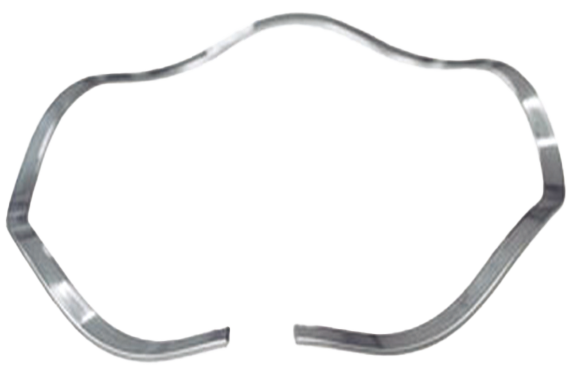
A single-ring wave structure including split type and lap type. Suitable for applications with extremely limited axial space and low-load preloading, such as miniature motor bearings.
Multi-layer Wave Spring
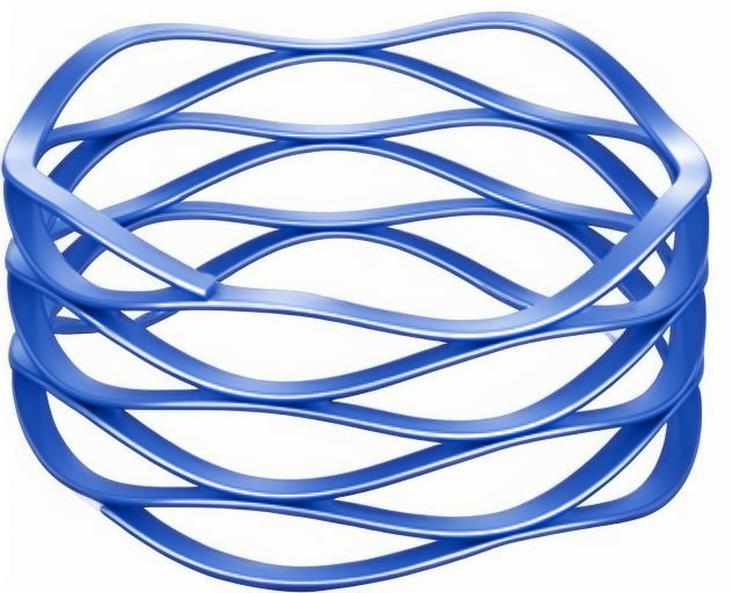
Composed of stacked multiple wave rings with flat end and plain end designs. It delivers greater elastic force and longer stroke, ideal for medium-load and sealing applications.
Nested Wave Spring
Constructed with a small wave spring nested inside a large one, featuring high load capacity and short stroke. Applied to high-pressure valves and heavy-duty bearing preloading.
2. Key Performance Advantages
- Extreme Space Utilization: The flat design saves 50% axial space compared with cylindrical springs of the same force rating, perfectly fitting miniaturized and compact equipment.
- Uniform Stress & High Fatigue Resistance: The wave structure ensures even stress distribution, resisting failure under long-term vibration; service life can reach millions of cycles under reasonable compression.
- Light Weight & Low Noise: Its weight is only about 40% of conventional springs, effectively reducing equipment operating noise and vibration for precision machinery.
- Wide Material Adaptability: Optional materials include 65Mn spring steel, 304/316 stainless steel, 17-7PH super alloy, adapting to extreme temperatures from -50℃ to 300℃.
II. Main Application Scenarios
1. Aerospace: Precision Support for Extreme Working Conditions
Aerospace equipment imposes strict requirements on lightweight, high temperature resistance and high reliability, where wave springs serve as core elastic components:
Engine Systems: Super alloy wave springs are adopted in fuel injection systems to precisely control nozzle opening and closing and improve combustion efficiency. In turbine systems, they preload bearings to eliminate clearances, reduce vibration and withstand high temperature and high pressure environments.
Spacecraft & Satellites: Miniature beryllium copper wave springs are used in attitude control systems, regulating propellant flow accurately via precise deformation at the 0.01mm level. They also provide support, positioning and cushioning in precision instruments to resist space vibration and impact.
2. Automotive Industry: From Powertrain to Lightweight Components
The automotive industry is the largest application field for wave springs, covering powertrain, transmission, chassis and core new energy vehicle components:
Traditional Fuel Vehicles: Applied in engine valve trains to ensure tight valve closure and improve ventilation efficiency; cooperating with shock absorbers in suspension systems to buffer road bumps; providing stable preload for clutches and brakes to guarantee precise operation.
New Energy Vehicles: Installed inside battery modules for elastic buffering between cells, absorbing vibration impact and compensating thermal deformation to maintain stable cell contact. Used at motor bearing end covers to eliminate axial clearance, reduce operating noise and extend bearing service life.
3. Industrial Machinery & Hydraulic Equipment: Core Components for Sealing and Preloading
In industrial equipment, wave springs are mainly used for bearing preloading, sealing compensation and load buffering:
Bearing Preloading: Applied in motors, reducers and machine tool spindles to eliminate bearing play, enhance rigidity and reduce noise. Saving 50% assembly space, it suits high-speed and precision operation scenarios.
Hydraulic & Pneumatic Systems: Acting as sealing compensation elements in hydraulic cylinders and high-pressure valves to evenly compress gaskets and prevent leakage; reducing vibration and wear in vacuum pumps and compressors to improve overall equipment efficiency.
4. Electronics & Precision Equipment: Elastic Solutions for Miniaturization
Consumer electronics and precision instruments pursue miniaturization and high precision, where wave springs act as key miniature elastic components:
Consumer Electronics: Providing micro support and reset force for mobile phone camera modules; maintaining stable locking force in electrical connectors to avoid poor contact.
Precision Instruments: In wafer clamping assemblies of semiconductor equipment, elastic force fluctuation is controlled within ±3% to prevent wafer deformation; precisely adjusting component positions in optical instruments to ensure operational accuracy.
5. Medical Devices: Lightweight and High Safety Adaptation
Medical devices require lightweight, non-magnetic and corrosion-resistant components, and wave springs perfectly fit precision surgical and diagnostic equipment:
Adopted in minimally invasive surgical instruments such as forceps to evenly control opening and closing force and avoid tissue damage; offering compact and reliable elastic support in diagnostic equipment for stable performance.
Titanium alloy wave springs are used in artificial joints and implantable devices, combining biocompatibility and elastic supporting performance.
6. Energy & Rail Transit: Applications in High Fatigue-resistance Scenarios
Energy Equipment: Withstanding long-term alternating loads in precision transmission systems of wind power and photovoltaic facilities; delivering load management and anti-vibration performance in high-pressure valves and drilling equipment of petrochemical industry.
Rail Transit: Applied in bogie bearing preloading and shock absorption systems to buffer operating vibration, improve riding stability and extend equipment service life.
III. Selection and Installation Guidelines
- Wave Number Matching: 2-wave for compact long-stroke scenarios such as miniature motors and door locks; 3-wave for conventional applications including automotive seats and general valves; 4-wave and above for scenarios requiring high uniformity such as sealing and medical devices.
- Material Selection: 65Mn for normal temperature conventional conditions; 304 stainless steel for humid and corrosive environments; 17-7PH super alloy for high-temperature working conditions.
- Installation Notes: Avoid exceeding the maximum compression to prevent plastic deformation; ensure flat mounting end faces to prevent uneven local stress; control installation coaxiality in precision applications to avoid eccentric load.
IV. Conclusion
With four core characteristics of compact structure, uniform stress, light weight and superior fatigue resistance, wave springs break the space and performance limitations of traditional springs, becoming indispensable elastic components in aerospace, automotive industry, precision electronics, medical devices and other fields. With the trend of equipment miniaturization, precision and high efficiency, the application scope of wave springs will continue to expand, and the demand for customized materials and structural design will keep growing.

 Tiktok

 Kwai

 REDnote


