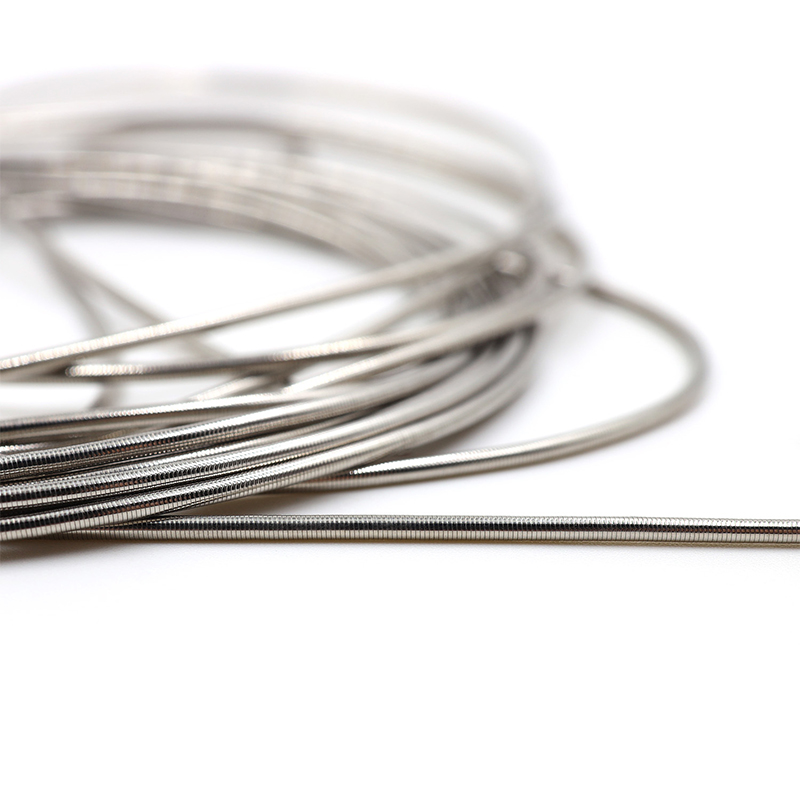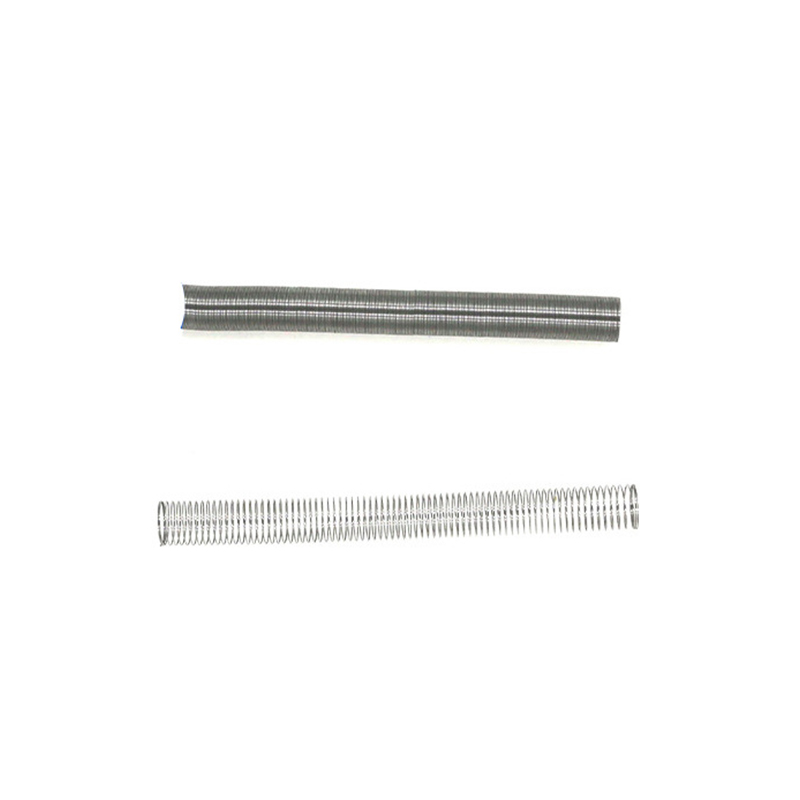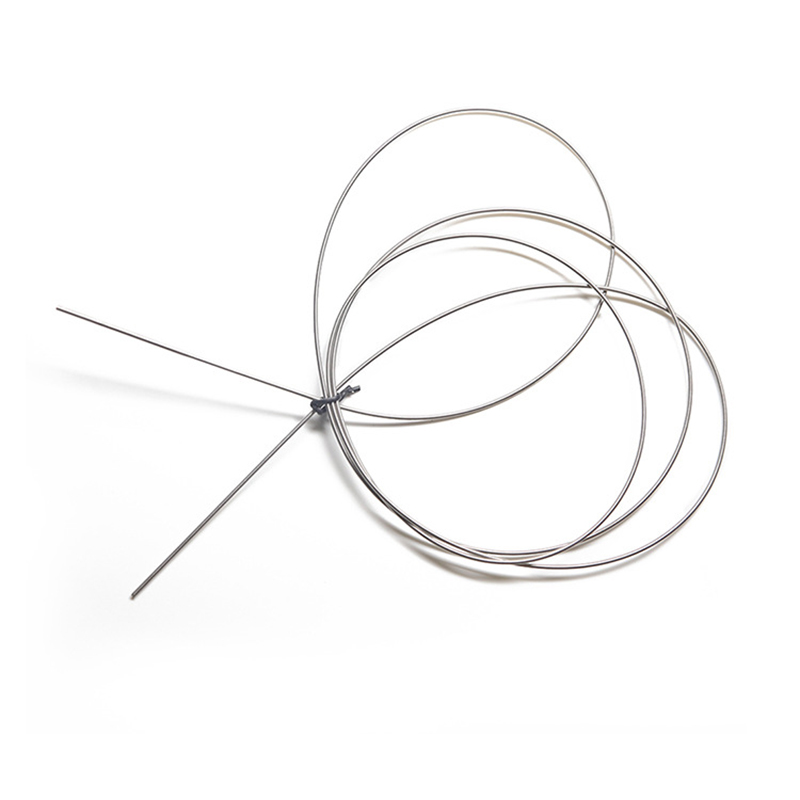
Flat wire guide wire spring is a precision spring component manufactured using flat cross-sectional wire in the field of medical intervention, achieving a balance between high space utilization and precise controllability through structural innovation. The following is an expanded explanation:
Core Structure and Material Innovation
1. Design principle of flat wire
Section optimization: Rectangular or elliptical flat wires (thickness 0.03-0.2mm, width 0.1-0.5mm) are used instead of traditional round wires to improve bending resistance by increasing the lateral support area. For example, the bending stiffness of rectangular section springs is increased by more than 30% compared to circular wire springs of the same diameter, while the inner diameter is larger under the same outer diameter, which can accommodate thicker guide wire shafts.
Multi layer composite structure: A typical design consists of three layers: the inner layer is made of nickel titanium alloy core wire to provide super elasticity (bending radius ≤ 2mm), the middle layer is made of stainless steel flat wire to enhance anti twisting properties (torque transmission efficiency ≥ 90%), and the outer layer is sprayed with hydrophilic coating (friction coefficient ≤ 0.02).
2. Material system
Medical grade alloys: 316L stainless steel (tensile strength ≥ 800MPa) is used in conventional scenarios, while nickel titanium alloy (hyperelastic temperature range -20 ℃~80 ℃) is suitable for complex vascular pathways. High end products use platinum tungsten alloy (X-ray attenuation value ≥ 350HU) to achieve development positioning.
Surface modification: Electrolytic polishing (roughness Ra ≤ 0.8 μ m) combined with aminated carbon nanotube coating reduces platelet adhesion by 70%, meeting the ISO 10993-5 biocompatibility standard.
Key technical indicators
| Parameter Name |
Medical Grade Typical Value |
Clinical Significance |
| Elastic modulus |
190-210GPa (stainless steel) |
balanced support force and flexibility |
| Anti bending frequency |
≥ 100000 times (180 ° bending) |
to meet the high-frequency bending requirements of blood vessels |
| radiopacity |
X-ray attenuation value ≥ 350HU |
meets ISO 25539-2:2020 standard |
| Biocompatibility |
ISO 10993-5 Cytotoxicity Level 0 |
No Hemolysis Reaction (Hemolysis Rate ≤ 5%) |
| Push force |
≤ 1.5N (0.035 "guide wire) |
to ensure smooth passage of the instrument through narrow blood vessels |


 Tiktok

 Kwai

 REDnote