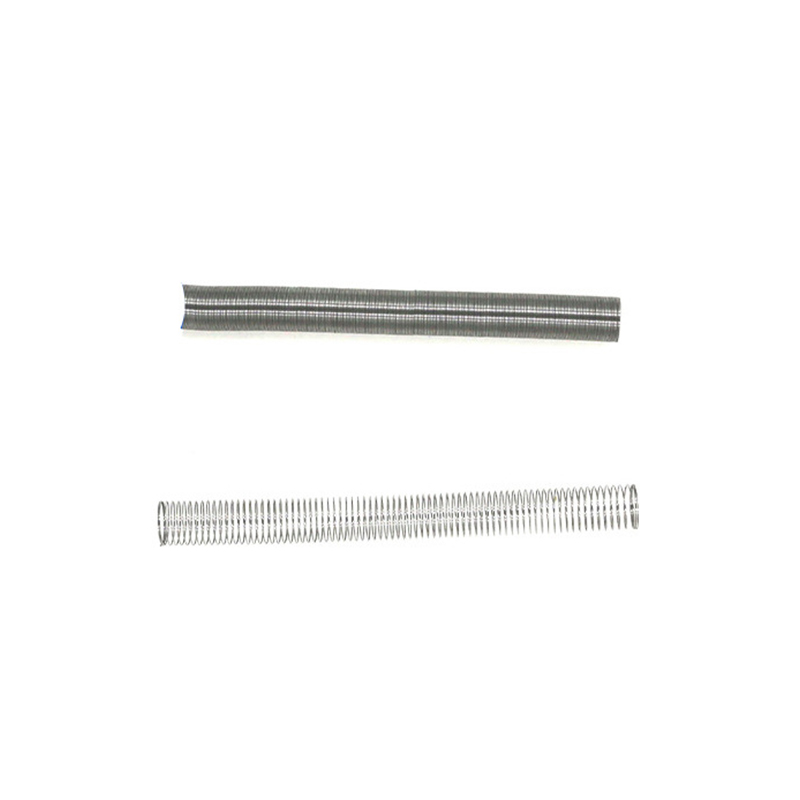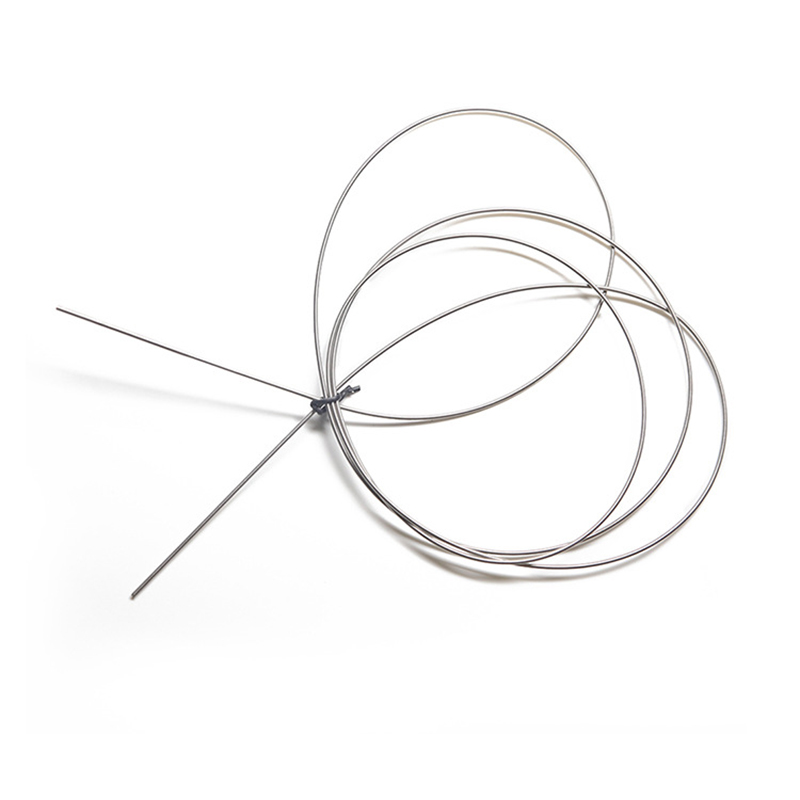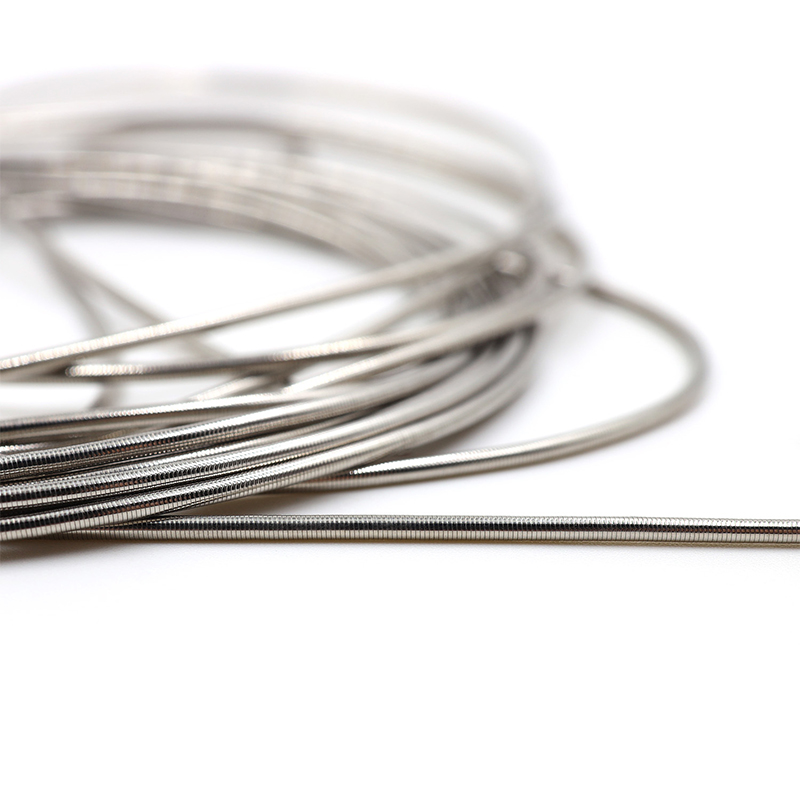
The disposable intubation spring is the core functional component of reinforced endotracheal intubation, usually embedded in the inner wall of the ventilation main tube in the form of a spiral metal wire. Through its two abilities of anti bending enhancement and shape retention, it ensures stable airway patency of endotracheal intubation in complex clinical scenarios. Its design closely revolves around the demand for "one-time use", balancing safety and operational convenience, and is one of the fundamental instruments in modern anesthesia and critical care medicine.
Core Structure and Material Characteristics
Spiral reinforcement design
The spring is made of medical grade stainless steel wire (such as 06Cr19Ni10) precision wound to form a continuous spiral structure. The typical wire diameter is 0.1-0.3mm, and the winding density is adjusted according to the product positioning:
High flexural type: tightly wrapped (pitch ≤ 0.5mm), capable of withstanding radial pressure of ≥ 5N, suitable for long-term mechanical ventilation or high mobility scenarios (such as transporting patients).
Flexibility optimized type: Loose wrapping (pitch 0.8-1.2mm), combined with a polyurethane outer layer, can be bent up to 180 ° without collapsing, suitable for difficult airway intubation.
Integrated embedding process
The spring is tightly integrated with the polyvinyl chloride (PVC) ventilation pipe through injection molding or hot melt technology, ensuring that no metal wires are exposed during repeated bending. Some high-end products are coated with PTFE on the outer layer of the spring, reducing the friction coefficient to below 0.03 and minimizing damage to the airway mucosa during intubation.
Development and positioning assistance
The spring itself or its outer material (such as PVC containing barium sulfate) has X-ray imaging properties, and with the depth markings on the insertion tube, the insertion tube position can be accurately determined under fluoroscopy, with an error of less than 2mm.
Key clinical value
Airway integrity protection
The rigid support of the spring can resist external pressure (such as twisting of the neck when the patient is lying on their side), avoiding the interruption of ventilation caused by the tube being bent. Clinical data shows that the incidence of airway obstruction with enhanced intubation is 67% lower than that with conventional intubation.
Adaptability to complex scenarios
Difficult airway management: In patients with cervical fixation, obesity, or high position of the larynx, the anti deformation ability of the spring can maintain the shape of the intubation and improve the success rate of blind insertion.
Long term ventilation support: The spring structure can prevent chronic deformation of the catheter due to airbag pressure or patient activity, and prolong effective ventilation time.
Advantages of infection control
The product is independently packaged after sterilization with ethylene oxide, and can be used once to avoid the risk of cross infection. It meets the requirements of the "Technical Specifications for Disinfection of Medical Institutions" for high-risk devices.
Technological Innovation and Development Trends
Material Upgrade
Nickel titanium alloy spring: Its super elastic properties can adapt to extreme bending (such as 360 ° torsion), and its biocompatibility is better, reducing tissue reactions.
Composite reinforcement materials, such as carbon fiber polymer composite springs, improve fatigue resistance (>100000 bending cycles without fracture) while being lightweight.
Intelligent integration
Some products integrate pressure sensors near the spring to monitor changes in airway resistance in real time and warn of catheter blockage or displacement.
3D printing technology enables personalized spring design, optimizing spiral angle and density based on patient airway CT data.
Environmental Protection and Cost Optimization
The development of biodegradable polymer springs (such as polylactic acid based materials) gradually decomposes after meeting short-term ventilation needs, reducing medical waste.
Modular design allows the spring to be separated from the main body of the catheter, reducing overall costs (the spring component accounts for about 20% of the total cost of the catheter).
The disposable intubation spring has become a cornerstone component of modern airway management through its dual design of mechanical reinforcement and infection control. It has gradually developed from the initial stainless steel spiral structure towards intelligence and personalization, continuously promoting the evolution of tracheal intubation technology towards safer and more efficient directions. In the future, with the integration of materials science and clinical needs, these "invisible" medical devices will play a more critical role in emergency rescue, precision medicine, and other fields.


 Tiktok

 Kwai

 REDnote