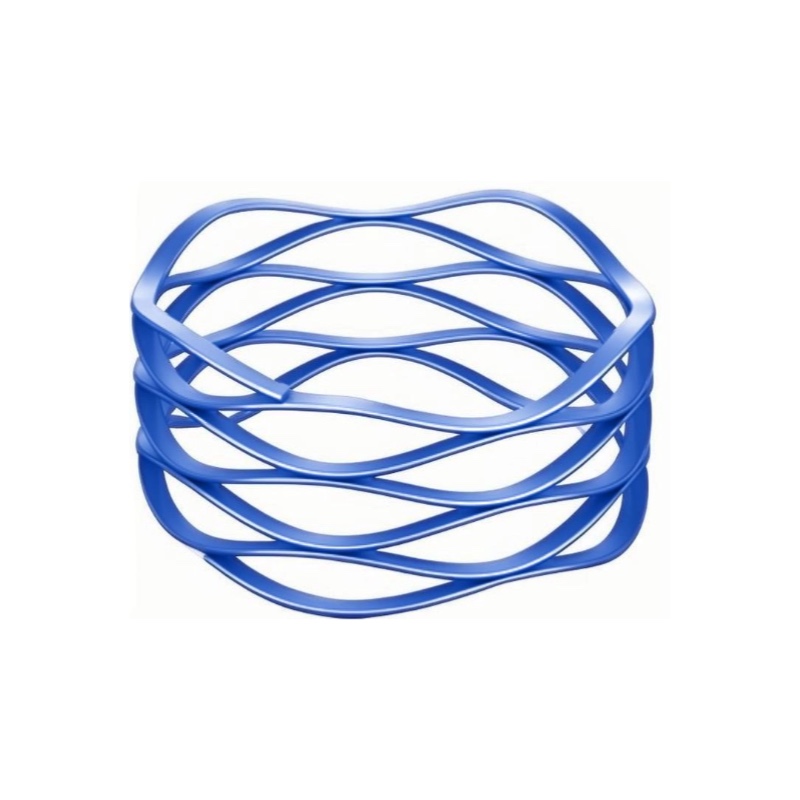
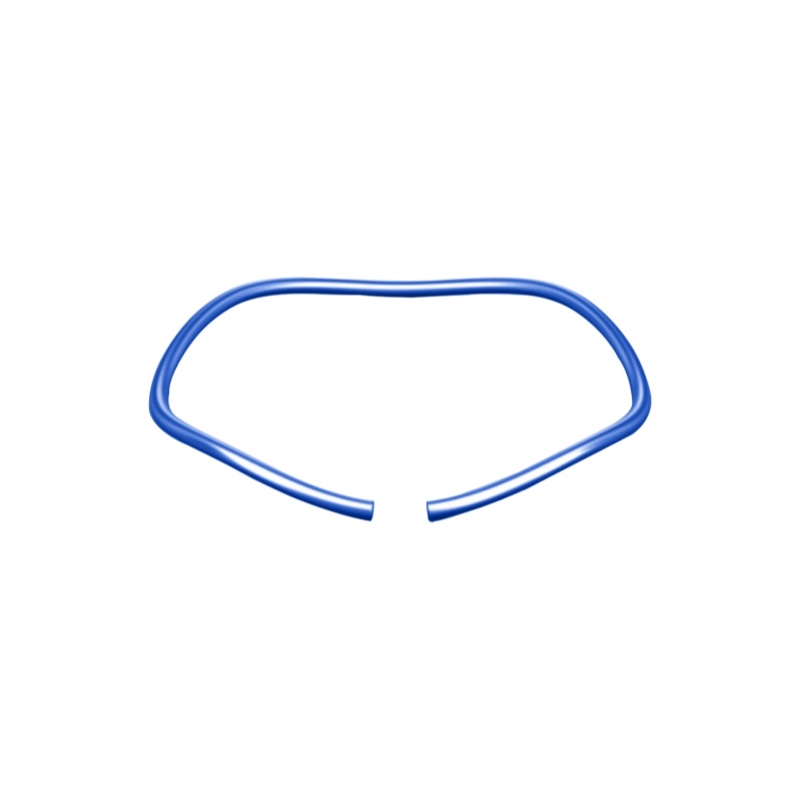
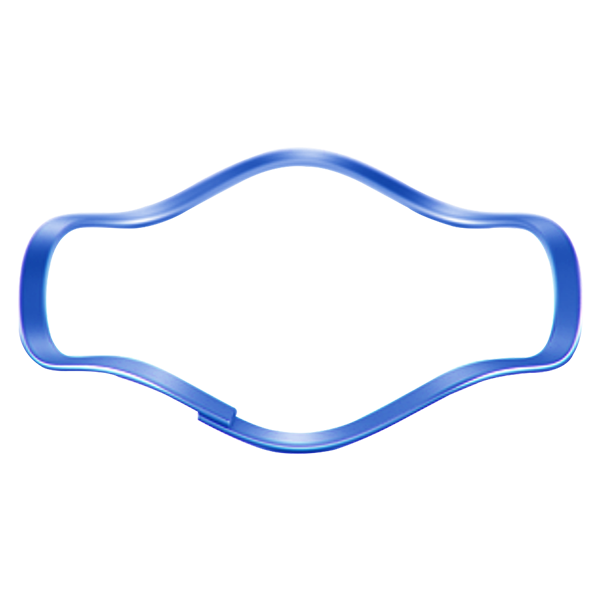
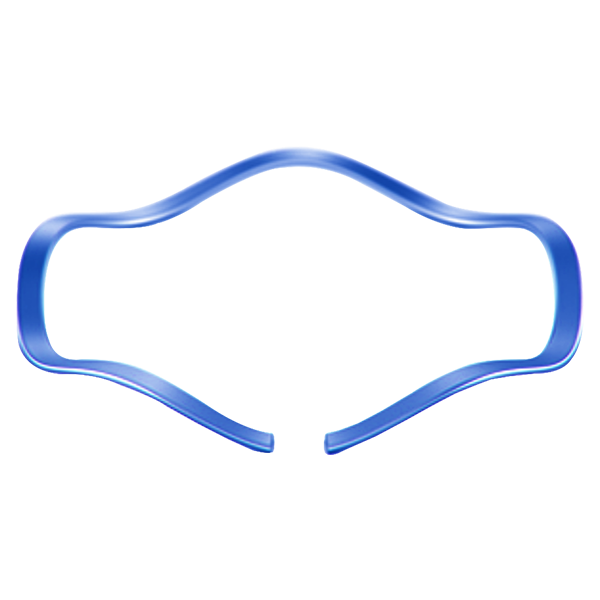
The top wave spring is an axial elastic element composed of two single-layer wave springs with opposite waveforms stacked together (corresponding to the peaks and valleys), forming a ring-shaped overall structure. Its core components include:
·Double slice waveform unit: The waveform parameters (wave number, wave height, pitch) of two wave springs are completely symmetrical, and the materials are usually spring steel (such as 60Si2Mn), stainless steel (such as 304, 316) or high-temperature alloys (such as Inconel 718), which are formed by stamping or rolling, and the surface can be galvanized, nickel plated or passivated to improve corrosion resistance.
·Top collaborative structure: Two wave springs are overlapped through interference fit or positioning point combination to form a "vertically symmetrical" waveform - the peak of one corresponds to the valley of the other. When compressed, the two waveforms deform synchronously, and the force value is uniformly transmitted through the contact surface to avoid single side force displacement.
This structure enhances the load-bearing capacity and stability while maintaining the "small space high elasticity" characteristics of the wave spring, making it particularly suitable for precision assembly scenarios that require "large elasticity+anti bias load".
Core strengths
·Stronger load-bearing capacity and more stable linear elasticity
The top structure transforms the "single point bearing" of a single-layer wave spring into "dual piece collaborative bearing" through the stacking of two pieces. Under the same compression amount, the elastic force is increased by 50%~80% compared to a single-layer wave spring of the same specification (for example, a top wave spring with a free height of 5mm can achieve an elastic force of 800N when compressed by 2mm, while a single-layer wave spring is only about 450N). At the same time, the symmetrical deformation of the dual panel waveform makes the elastic curve closer to linearity (non-linear error ≤ 3%), which is suitable for scenarios that require precise elastic force control (such as adjusting bearing preload force, which needs to maintain preload force fluctuation ≤ 5%).
·Outstanding ability to resist eccentric loads, suitable for shaft/hole eccentric working conditions
When there is a slight eccentricity (such as 0.1~0.3mm) in the shaft or hole of a regular single-layer wave spring, it is prone to excessive local deformation due to uneven stress, and even "waveform tilting" may occur; The top structure can automatically compensate for installation eccentricity within ± 0.5mm through the "interlocking effect" of peaks and valleys - the offset of one wave spring will be offset by another reverse waveform, ensuring uniform distribution of overall elastic force. For example, in the assembly of motor bearing seats, the top wave spring can reduce the pre tension force fluctuation caused by shaft vibration, reducing the bearing temperature rise by 10 ℃~15 ℃.
·Higher space utilization, suitable for compact structural design
Compared to spiral springs, the axial height of the top wave spring is only 1/3~1/2 of that of the same elastic force spiral spring (for example, when achieving a 1000N elastic force, the height of the top wave spring is about 8mm, while the spiral spring needs to be ≥ 25mm), and the radial dimension has a smaller fitting gap with the shaft/hole (usually ≤ 0.2mm). In the control of stator rotor clearance of new energy vehicle motors, its compactness can help reduce the overall volume of the equipment by more than 15%, while avoiding the problem of "resonance noise" of coil springs.
Typical Applicable Scenarios: Core Selection for High Load, Small Space, and Precise Control
·Bearing pre tightening and clearance compensation: such as machine tool spindle bearings and automotive gearbox bearings, stable pre tightening force (200-2000N) is provided to the top wave spring to eliminate bearing clearance and improve rotational accuracy (radial runout can be controlled within ≤ 0.005mm).
·Sealing of hydraulic/pneumatic valve components: In the valve core reset mechanism of high-pressure valves, its linear elasticity can accurately control the opening pressure of the valve core (error ≤ 0.02MPa), and the compact design of the valve body cavity is suitable for small volume.
·Precision instrument buffering: such as the wafer transfer shaft of semiconductor equipment, the top wave spring can provide uniform buffering force within ± 0.1mm axial displacement to avoid wafer collision damage.
·High temperature/corrosive environment: When using stainless steel or high-temperature alloy materials, it can be adapted to scenarios such as engine turbine shafts (temperature ≤ 300 ℃) and marine equipment transmission shafts (salt spray environment), with a lifespan that is 3-5 times longer than ordinary coil springs.

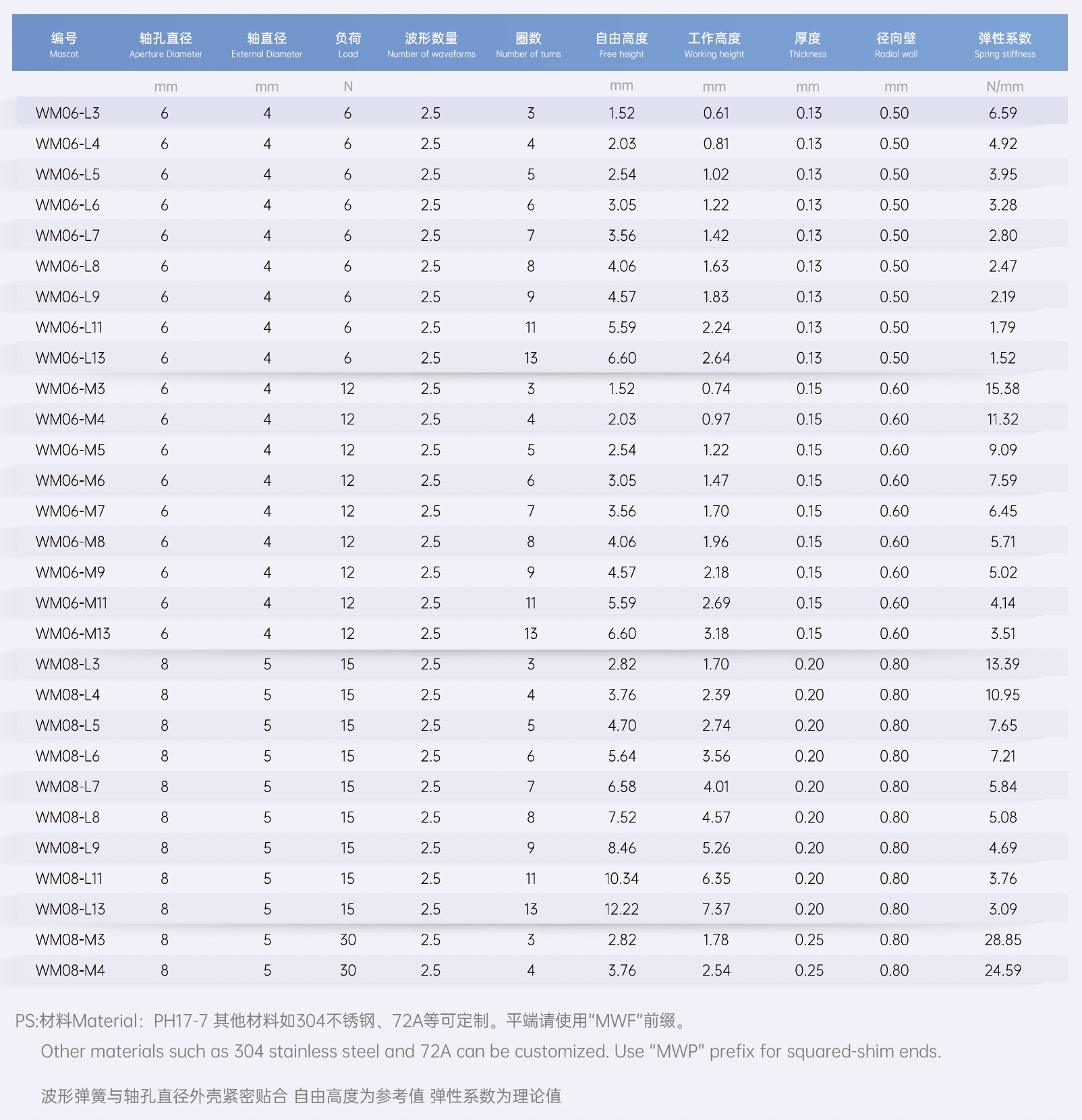 ……
For more size specifications, please contact us.


 Tiktok

 Kwai

 REDnote